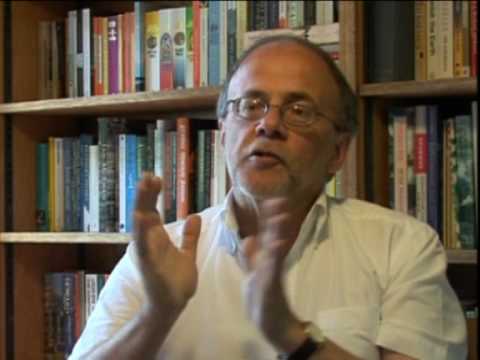
Tag: <span>00 Bauckham_Richard</span>

Approaching the Millennium (Bauckham, 1999)

Richard Bauckham offers a perceptive analysis of the hold which the year 2000 is exercising on our culture. Against this background, he argues for the central importance of a Christian eschatology which takes seriously
both the transcendent (God’s promised future new creation) and the utopian (inspiration to work for change in the
present).

The New Age Theology of Matthew Fox: A Christian Theological Response (Bauckham, 1996)

Richard Bauckham examines the popular New Age theology of ex-Dominican, now Episcopalian, Matthew Fox. He
values Fox’s theological focus on the goodness of all of creation and the themes of gift, blessing and gratitude that
spring from such a recognition. However, he offers a critique in two areas: first, over a reading of theological history that offers a simple binary division between pro- and anti-nature traditions, which, claims Bauckham, did
not exist. Secondly, he warns against the tendency to confuse Creator and creation; a proper valuing of creation will come from a reappropriation of creatureliness, not a divinization of ourselves and the cosmos.

The Relevance of Revelation (Bauckham, 1996)

Revelation is the Bible’s climactic and concluding prophecy. Writing deliberately in the tradition of the Hebrew prophet, the prophet John gathers up and completes their contributions to the overall theme of biblical prophecy: the coming of God’s kingdom in all the world. His own prophetic revelation discloses the way in which the universal kingdom of God is finally to come, through Jesus the Messiah and his people.

In order to read Revelation appropriately, we need to recognize equally the way it relates to its original context and the way it transcends that context and continues to address the church in all periods. Like all biblical prophecy, Revelation addressed a concrete historical situation— that of Christians in the Roman province of Asia at the end of the first century CE— with the purpose of enabling them to discern the purpose of God in that situation and to respond in an appropriate way. So although the prophecy concerns the final victory of God’s rule over all evil and the final completion of God’s purpose in the new creation of all things, it portrays the coming of God’s kingdom in direct relation to the situation of its first readers. The eschatological future is envisaged in terms of its impact on the present, so that the first readers might see how to live in their own situation in the light of the coming kingdom. This means that we cannot ignore the situation of the first readers if we are to perceive correctly the continuing relevance of Revelation to later readers.


First Steps to a Theology of Nature (Bauckham, 1986)

‘Nature’ is a slippery term with a wide variety of meanings and nuances which can all too easily encourage the unwary writer or reader to slide from one to another without making necessary distinctions and to carry the evaluative nuances of one sense over to another. In theology it has several distinct usages.

The Delay of the Parousia (Bauckham, 1979)

Early Christianity was both continuous and discontinuous with first-century Judaism. Its theology shared many features of contemporary Jewish thought, though these were given a distinctively Christian character by their relationship to Christianity’s unique faith in Jesus Christ. As in the case of many other issues, an adequate account of the understanding of the delay of the parousia in early Christianity must reflect both the continuity and the discontinuity with Judaism. In some respects the problem of the delay of the parousia was the same problem of eschatological delay which had long confronted Jewish apocalyptic eschatology; in other respects it was a new and distinctively Christian problem, in that the End was now expected to take the form of the parousia of Jesus Christ in whose death and resurrection God had already acted eschatologically. Our subject therefore needs to be approached from two angles: from its background in Jewish apocalyptic and in terms of its distinctively Christian characteristics. Within the limits of this lecture, I can attempt only one of these approaches, and I have chosen the former

Universalism: A historical survey (Bauckham, 1979)

The history of the doctrine of universal salvation (or apokastastasis) is a remarkable one. Until the nineteenth century almost all Christian theologians taught the reality of eternal torment in hell. Here and there, outside the theological mainstream, were some who believed that the wicked would be finally annihilated (in its commonest form. this is the doctrine of ‘conditional immortality’). Even fewer were the advocates of universal salvation, though these few included same major theologians of the early church. Eternal punishment was firmly asserted in official creeds and confessions of the churches. It must have seemed as indispensable a part of universal Christian belief as the doctrines of the Trinity and the incarnation. Since 1800 this situation has entirely changed, and no traditional Christian doctrine has been so widely abandoned as that of eternal punishment. Its advocates among theologians today must be fewer than ever before. The alternative interpretation of hell as annihilation seems to have prevailed even among many of the more conservative theologians. Among the less conservative, universal salvation, either as hope or as dogma, is now so widely accepted that many theologians assume it virtually without argument.

Ecological Hope in Crisis (Bauckham, 2012)

The church has frequently had to think afresh about Christian hope in changing contexts. It’s not that the essence of Christian hope – the great hope, founded on Jesus Christ, for God’s redemptive and fulfilling renewal of all his creation – changes. But if Christian hope is to retain its power to be the engine of the church’s engagement with the world, if it is to be more than an ineffective private dream, hope itself needs renewal as the world changes. From the infinite riches of God’s future for the world we must draw those that can be transformative for our time. That way we can re-envision the world in the light of hope.