
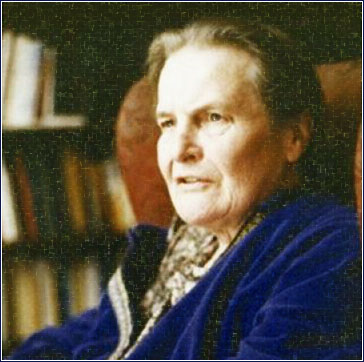
Anscombe bibliography (Anscombe)
An online bibliography of Anscombe’s writings. Visit this for more articles than on this site.

An online bibliography of Anscombe’s writings. Visit this for more articles than on this site.
We end these thoughts on Holy Week where we began: with the central truth that what has taken place in the week that has passed, and what has taken place supremely at the event of the crucifixion is the outworking of the will of God. To the participants and bystanders, no doubt, everything seemed very far from that, just another muddle in a place inflamed with strife. And to the followers of Jesus, the little rag-tag caravan of men and women who found themselves attached to him, it was nothing short of disaster. Yet Isaiah speaks of the putting to death of the Lord’s servant as God’s will – as the outworking of the eternal purpose of God, as no accident but rather the placed where we are to learn to see God’s resolve, undeflected, undefeated, utterly effective. How can this be so? What is this divine resolve which is set before us here, in the affliction and grief of the servant of God?
Why do the Christian ethics of war and the law founded on it prohibit assassinations? Because assassination cannot be a true act of judgment. The logic of armed conflict is a logic of collective judgment on collective responsibility for wrong. War enacts justice between nations, taking over judgment, as the old saying had it,ubi iudicia cessant,where the courts run out. Its justice is attributive, denying the facility to do wrong, rather than vindicative, setting right old wrongs. As judgment it is pretty rough, lacking the detailed discernment to attribute personal responsibility.
The Christian answer to violence is that violence must be met with love. “Love your enemies and pray for those who persecute you, so that you may be children of your Father in heaven” (Matt. 5:44). And Paul instructs the Christians in Rome to “never avenge yourself, but leave room for the wrath of God; for it is written, ‘Vengeance is mine, I will repay says the Lord.’ No, ‘if your enemies are hungry feed them; if they are thirsty, give them something to drink; for by doing this you will heap burning coals on their heads.’ Do not be overcome by evil, but overcome evil with good” (Rom. 12:19-21).
But the truth of the matter is that we find it difficult to love our enemy. It is highly unlikely that any of us would have invited bin Laden in for dinner if he had showed up at our door.
Barth grounds the goodness of creation not in its own independent reality, but in the goodness of Jesus Christ, who, as Barth works out in CD II.2, is the concrete form of the command of God and fulfillment of the covenant between God and humanity. By grounding the goodness of creation in Jesus Christ, Barth makes both the ontological goodness of creation itself and the noetic basis of that goodness dependent on this Christological determination. As a result, scholars have suggested that Barth’s theology really has no proper doctrine of creation at all, i.e. that Barth’s doctrine of creation is simply Christology in disguise.
This dissertation argues that while Barth’s Christological determination of creation is central to Barth’s work, it is not the case that Barth absorbs creation into Christology, i.e. nature into grace, leaving creation without any meaningful ontology of its own. Rather, this dissertation demonstrates that Barth’s ontology of creation is covenantal in structure, but not equivalent to Christology. Furthermore, this dissertation shows that this covenantal structure of creation is specifically ordered so that the creature may realize her goal as God’s covenant partner.
Lecture and Q&A from Garrett-Evangelical Theological Seminary 2007 Conference on Setting the Agenda for Political Theology
Lecture (“Mercy”) and Q&A from Garrett-Evangelical Theological Seminary 2007 Conference on Setting the Agenda for Political Theology