
Category: Online Resources
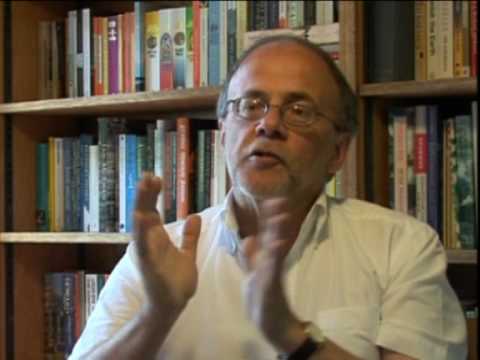
Richard Bauckham Website Resources (Bauckham)
Links to resources on Richard Bauckham’s personal website
Certainty and Charity. Presentation to House of Bishops Advisory Group on Sexuality (O’Donovan, 2012)
Christians are used to appealing to heavy reasons for doing what they do; they think of themselves as always acting on their beliefs. Theology, with its own warning against making a graven idol, teaches us to travel light ideologically, to allow the non-ultimate claims of immediate practical need to have their own space.
Practical theology can understand the place of the “pastoral accommodation” within the church. A pastoral accommodation is a response to some urgent presenting needs, without ultimate dogmatic implications. A pastoral accommodation may be paradoxical in relation to basic moral belief, as with the miscalled “just war” which appears at first glance to undermine the commitment to peace which it claims to uphold. The Winchester Report, in recommending a provision for marriage in church of someone with a previous partner still living, conceived this as a pastoral accommodation, making it quite clear, as did the episcopal advice to clergy that followed it, that this was to uphold the principle that marriage was essentially a lifelong commitment and broken marriage was a wrong
The Physician as Political Actor: Late Abortion and the Strictures of Liberal Moral Discourse (Brian Brock, 2006)
By examining the range of factors pressing on medical professionals faced with a decision in a case of late-term abortion, it becomes apparent that the theological resources ruled out of bounds by the standard account can be
considered an essential part of a truly liberating and properly supple moral account of medical decision-making. Close attention to the social, political and legal context of contemporary medicine reveals that the standard account of medical ethics, Principles of Biomedical Ethics by Beauchamp and Childress, despite its universalist aspirations, disempowers rather than empowers moral decision-making by medical professionals.
Genetics, Conversation and Conversion: A Discourse at the Interface of Molecular Biology and Christian Ethics (Brian Brock)
This chapter reports on an experimental conversation between a practicing molecular biologist and a Christian ethicist. It arose in the form of joint lectures in which the presentation of the technical state of the art in genetic science proceeded hand in hand with a theological analysis of the moral implications of its scientific models, discourses, and hermeneutic claims. The impulse to open such dialogue was a sense from both sides that there is a serious deficit of detailed interaction between the two disciplines, creating a critical lack of relevant ethical discussion of issues related to human genetics. As a result, popular and academic discussions of ethical
issues in human genetics have drifted apart to the point of absurdity. Yet rather than responding to this estrangement by embarking on the popular ‘scientific education’ approach, we felt that a concerted
attempt was needed not simply to express the science to the public, but to try to understand the moral implications of the science by struggling to articulate theologically expressed questions and criticisms in the course of discussion about the science.
Brian Brock, Walter Doerfler & Hans Ulrich
Praise: The Prophetic Public Presence of the Mentally Disabled (Brian Brock)
I grew up in a Christian home on a dead end street. Around the corner was what we used to call a “home”—a group home for the mentally disabled sited in a typical residential house. Its residents didn’t seem to get out much, leaving only a thin residue of childhood memories. They shuffled by the end of our street in single file in the company of a single caregiver. These incongruous moments lodged in a child’s mind as spectral and discomforting reminders that the world is full of strange and unmentionable things. It was only in such public spaces that I ever rubbed shoulders with the mentally disabled, for this was the end of a long age in the developed West of hiding them away (Schweik, 2009). Such people were to be kept in “homes” and special schools and largely away from churches. (The Blackwell Companion to Christian Ethics, Chapter 11)
Autism, Care and Christian Hope (Brian Brock, 2009)
This article takes a Christian theological approach to autism to re-narrate the relationship of carers for individuals with autism. The discussion displays concrete ways that our care for those with autism is reshaped by being set within ontologies that privilege engaged self-investment, within a cultural context that rarely transcends its desire to study phenomenon through highly self-aware and disengaged description. Also presented is a phenomenological exploration of the challenges for carers by the experience of caring for those with autism, and the article concludes by entering a theological debate about how best to conceive our relationship to them.
Being Disabled in the New World of Genetic Testing: A Snapshot of Shifting Landscapes (Brian Brock)
This paper speaks biographically in order to introduce a real time snapshot of the forces genetic technologies bring to bear on the disabled and their families. We do so as an academic theologian and a neo-natal nurse experiencing the joys and frustrations of first-time parenthood. Our son, Adam, now two years old, has Down’s syndrome, and it is the events of his first six months on which our account draws. This paper will outline the
pressures we experienced as parents of a ‘genetically handicapped’ child, and then, in conclusion, offer a few theological reflections.