

Tag: <span>01 document</span>

“Did Not Our Hearts Burn Within Us?” (Hays, 2002)

School of Theology Graduation Ceremony, Charles Sturt University Canberra, Australia

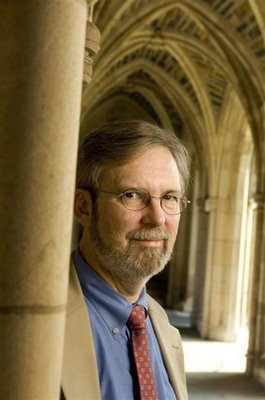
Their hopes were not wrong, just out of focus. They were looking for a prophet mighty in deed and word, like Moses, to lead the people out of bondage; instead, they got Jesus, a prophet mighty in deed and word who died on a cross. This suffering was not in their script, so Cleopas and friend failed to discern what God had done in the resurrection of Jesus, even when the Risen Lord was walking right beside them. Why?

To find out, we must step back in and resume the story.
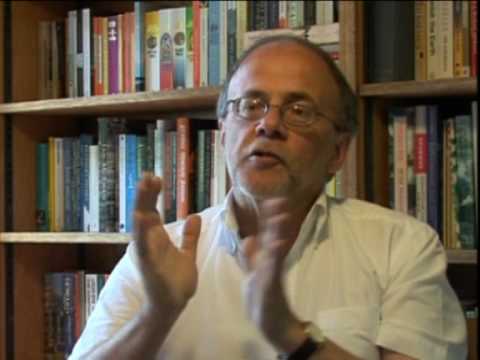
Interview with Richard Hays by John E. Anderson (Hays, 2010)

You have written prolifically on Paul, including your seminal dissertation The Faith of Jesus Christ: The Narrative Substructure of Galatians 3:1-4:11. What first drew your attention to Paul, and how do you see your work on Paul fitting in to the larger context of Pauline scholarship?

My fascination with Paul took shape during my years in the doctoral program at Emory, as a result of seminars with Lee Keck and Hendrikus Boers. I was taking those courses in the immediate wake of the publication of Ed Sanders’ Paul and Palestinian Judaism and J. Christiaan Beker’s Paul the Apostle. These works were raising in different ways questions about Paul’s “pattern of religion” and about the problem of “contingency and coherence” in Paul’s thought. It seemed to me that the way most Pauline scholars approached these issues was driven too much by the quest for an ideationally/systematically formulated “center” of Paul’s thought, with too little attention to the narrative underpinnings of Paul’s teaching. So I began to mull over the ways in which Paul’s letters might be understood to contain allusive references to an underlying story. At the same time, in the seminar with Keck, I wrote a paper on Romans 3, which later became my first published article, a piece in JBL called “Psalm 143 and the Logic of Romans 3.” The germinal insight of the essay was that Ps 143:2, which Paul loosely cites in Rom 3:20, contains in its wider context references to the righteousness of God that help to elucidate the logic of Paul’s argument in Rom 3:21-26. You can see how this led on to further developments as I followed this thread.

Learning to Read the Bible Again (with Ellen Davis), (Hays, 2004)

A cartoon in the New Yorker shows a man making inquiry at the information counter of a large bookstore. The clerk, tapping on his keyboard and peering intently into the computer screen, and peering intently into the computer screen, replies, “The Bible? . . . That would be under self-help.”

As the cartoon suggests, in postmodern culture the Bible has no definite place, and citizens in a pluralistic, secular culture have trouble knowing what to make of it. If they pay any attention to it at all, they treat it as a consumer product, one more therapeutic option for rootless selves engaged in an endless quest of self-invention and self-improvement. Not surprisingly, this approach does not yield a very satisfactory reading of the Bible, for the Bible is not, in fact, about “self-help”; it is about God’s action to rescue a lost and broken world.

A Season of Repentance: An Open Letter to United Methodists (Hays, 2004)

A PROPOSAL: Let us stop fighting one another, for a season, about issues of sexuality, so that we can focus on what God is saying to the church about our complicity in the violence that is the deepest moral crisis of our time. And let us call the church to fasting and prayer in repentance for the destruction our nation has inflicted upon the people of Iraq.

“The Faith of Christ”: Engaging the Writings of Richard B. Hays by A.A. Just (2003)

When Richard Hays published The Faith of Jesus Christ in 1983 it sent a ripple through the New Testament community that still may be felt today. Its re-publication in a more accessible form for Eerdmans in 2002 signaled that his book had real staying power. This new volume is not a rewrite of his original work but its presentation again, accompanied by a winning foreword by Luke Timothy Johnson and a reflective introduction by the author himself about the theological implications of his thesis. It also includes two appendixes, one by James D. G. Dunn and Hays’s response to Dunn that represent part of the debate in the Society of Biblical Literature of the Pauline Theology Group from 1991 over the question of “the faith of Jesus Christ.”

…And They Shall Prophesy (Hays, 2005)

Baccalaureate Sermon, Duke Divinity School, May 2005.

“When the day of Pentecost had come, they were all together in one place.”

Now, one of the things that we have worked hard to teach you here at Duke Divinity School is the difficult art of
discerning when you can and cannot take the biblical story and apply it straight off to the situation in which you find yourself. This art is called, as you know, “hermeneutics.” Let me give you an illustration.

Reading Scripture as a Coherent Story (Bauckham, 2003)

From “The Art of Reading Scripture”.

The church’s reading of Scripture has usually presupposed its narrative unity, that is, that the whole of the
Bible – or the Bible read as a whole – tells a coherent story. Any part of Scripture contributes to or illuminates in some way this one story, which is the story of God’s purpose for the world. If Scripture does indeed tell the
story of God’s purpose for the world, then we should certainly expect to find unity and coherence in it. But the
idea of reading Scripture as a unified narrative seems problematic from at least two very different perspectives: (1) that of biblical scholars for whom the great diversity of the biblical texts makes the claim of unity inconsistent with the nature of the Bible and (2) that of postmodern critics for whom a unified narrative would establish
Christianity as the oppressive metanarrative that historically it has very often been. This essay begins with
a section that responds mainly to the first perspective. The argument about the Bible is then interrupted by a critical consideration of the second perspective (the postmodern critique of metanarratives) in order to resume,
in the third section, a discussion of the biblical story with some conceptual tools provided by the postmodern approach.

Paul’s Christology of Divine Identity (Bauckham)

In my book God Crucified: Monotheism and Christology in the New Testament (The Didsbury Lectures for 1996; Grand Rapids: Eerdmans, 1999) I set out in broad outline a particular thesis about the rela ionship of early Jewish monotheism and early Christian Christology, which also entails a relatively fresh proposal about the character of the earliest Christology. My purpose in the present paper is to summarize the thesis of the first two chapters of
God Crucified, and then to focus in considerably more detail than I have done hitherto on the Pauline epistles, to show how the thesis is verified and exemplified in Pauline theology.