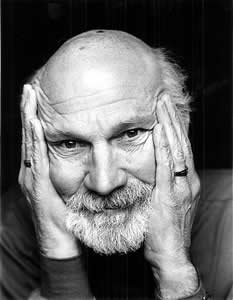
The Very American Stanley Hauerwas (Webb, 2002)
“Over the years I have become convinced that Hauerwas is right more often than he is wrong, but it is the way in which he is wrong that makes him so interesting.”

“Over the years I have become convinced that Hauerwas is right more often than he is wrong, but it is the way in which he is wrong that makes him so interesting.”
“I find it almost beyond belief that the Editors resort to the Niebuhrian distinction between nonviolent resistance and non-resistance in order to silence the pacifist voice.”
“We must bring to an end the disciplinary divisions that invite theologians to say, “I cannot comment on St. Paul’s understanding of the gospel because scripture is not my field.” Indeed the attempt to make theology “objective” through the transformation of theology into a historical discipline must be seen for what it is: a way to separate theology from its source, which is the praise of God. Of course, none of us are capable of knowing all we need to know to do the work of theology, but we must not forget that we know all we need to know to make the work of theology compelling: God was in Christ reconciling the world to himself.”
The United Methodist Church stands at a critical moment. Founded in 1968 at a time of ecumenical enthusiasm and euphoria, it now harbors within it forces that threaten to destroy it as a single body. Those forces did not arise overnight; indeed they stretch back into the parent bodies that merged to form United Methodism. Three groups, the liberals, radicals, and conservatives, are finding their uneasy compromise difficult to maintain. It has long been agreed that United Methodism is a coalition of diverse conviction and opinion, having been formed under the banner of theological pluralism. Church leaders took the view in the 1970s that the core identity of United Methodism, if there was one at all, was located in commitment to the Methodist Quadrilateral (Scripture, tradition, reason, and experience), and that this not only permitted but in fact sanctioned and fostered doctrinal pluralism. Doctrinal pluralism, despite its intellectual incoherence, will work so long as something akin to Liberal Protestantism is held by the leadership of the church and so long as those who are not Liberal Protestants acquiesce. In fact pluralism is part of the intellectual structure of Liberal Protestantism. If you believe that Christian doctrine is essentially an attempt to capture dimensions of human experience that defy precise expression in language because of personal and cultural limitations, then the truth about God, the human condition, salvation, and the like can never be adequately posited once and for all; on the contrary, the church must express ever and anew its experience of the divine as mediated through Jesus Christ. The church becomes a kind of eternal seminar whose standard texts keep changing and whose conversation never ends. In these circumstances pluralism is an inescapable feature of the church’s life.